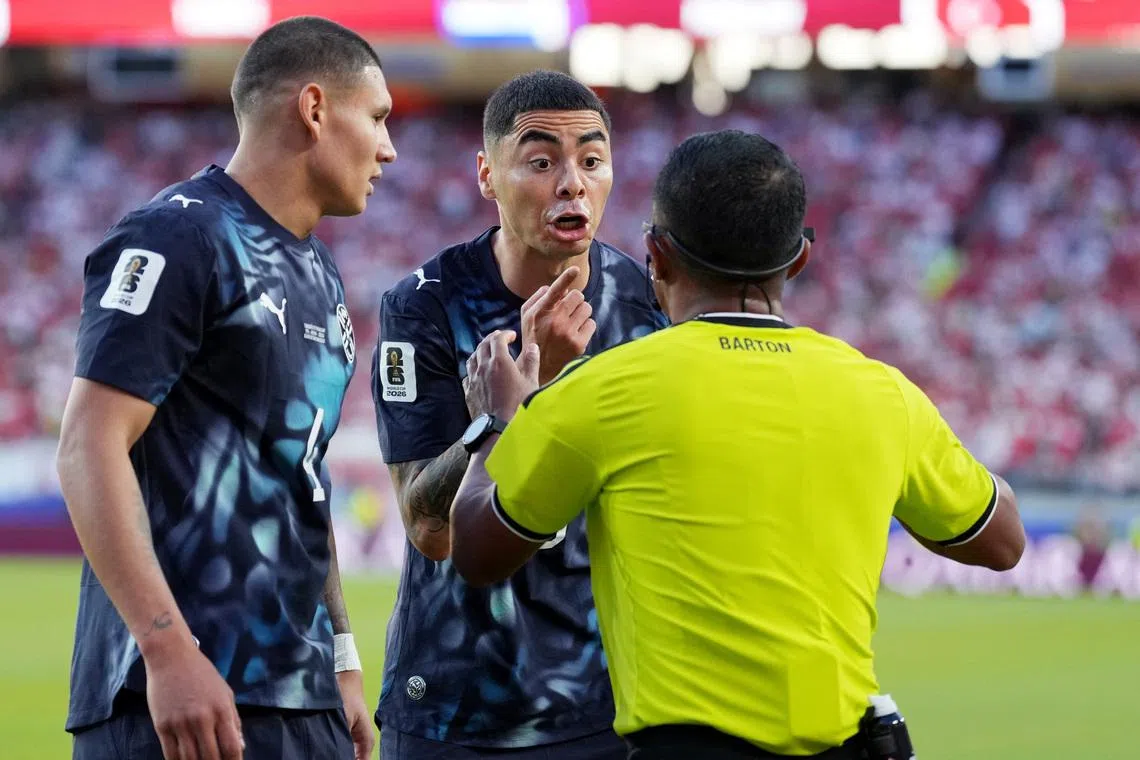
When Miguel Almiron lifted his hand to hide his mouth in a heated exchange with Turkey’s Mert Muldur, he may have thought he was shielding himself from a referee’s view. Instead, the gesture triggered a historic red card, making Almiron the inaugural player dismissed under FIFA’s controversial mouth‑covering rule introduced for the 2026 World Cup.
Why FIFA introduced the mouth‑cover ban
In April 2026, FIFA announced a sweeping amendment to the Laws of the Game: any player who deliberately covers their mouth while confronting an opponent would be shown a straight red card. The decision was framed as part of a broader campaign to eradicate racism, homophobia and other forms of verbal abuse from football’s biggest stage. FIFA president Gianni Infantino explained the logic in a March press conference, stating, “If you do not have something to hide, you don’t hide your mouth when you say something. That’s it, as simple as that.”
The rule was born out of mounting frustration after several high‑profile incidents in 2025, notably the February Champions League clash where Benfica’s Gianluca Prestianni was accused of racially abusing Real Madrid’s Vinícius Júnior. Although Prestianni denied the allegation, a UEFA disciplinary panel later handed him a six‑match ban for “homophobic conduct.” The episode underscored the difficulty of policing verbal offences, prompting FIFA to seek a more observable, enforceable signal.
The moment in Santa Clara
On June 19, the Group D match between Paraguay and Turkey unfolded at the State Farm Stadium in Santa Clara, California. Paraguay led 1‑0 when a scuffle broke out after Turkey’s Mert Muldur challenged Almiron near the halfway line. Video footage captured Almiron raising his hand to his mouth while gesturing toward Muldur. Within seconds, the referee consulted VAR, and Almiron was shown a red card in first‑half stoppage time.
VAR officials confirmed that the hand‑covering motion matched the new guideline criteria: a deliberate act intended to conceal spoken words during a confrontation. The decision sparked an immediate outcry from Paraguay’s bench, but the referee stood firm, citing the rule that had been communicated to all teams during the pre‑tournament briefing.
Immediate impact on the match
Paraguay, reduced to ten men, managed to hold on to their 1‑0 lead until the final whistle, a testament to disciplined defending and a late surge from Turkey that fell short. The red card forced Paraguay’s coach, Carlos Jara Saguier, to reshuffle his midfield, moving veteran José Ortigoza into a more defensive role. While the result remained unchanged, the incident threw a spotlight on the tactical ramifications of the new rule: teams must now factor in the risk of losing a player for a seemingly innocuous gesture.
Turkey’s coach, Şenol Güneş, expressed frustration, noting that “the spirit of the game should not be punished for a hand movement. Yet, the rule is clear, and we must adapt.” The match will be remembered not only for the scoreline but for the precedent it set.
Reactions from players, officials and fans
Almiron, who previously starred for Newcastle United in the Premier League, issued a brief apology on social media, saying, “I didn’t intend to break any rule. I’ll respect the decision and learn from it.” His statement was met with a mixture of sympathy and criticism. Some former players, such as former England captain Gary Lineker, argued that the rule could be “over‑reaching” and may penalize players for non‑verbal actions that are not inherently abusive.
Conversely, anti‑racism advocacy groups praised FIFA’s decisive action. The Football Against Racism Initiative (FARI) released a statement lauding the red card as “a clear message that any attempt to hide hateful language will not be tolerated.” The debate now centers on whether the rule will effectively deter abuse or simply shift it to more covert forms.
Legal and regulatory considerations
Legal experts have begun to assess the rule’s compatibility with existing disciplinary frameworks. Sports law professor Dr. Ana Martínez of the University of Barcelona cautioned that “the rule relies heavily on subjective interpretation of intent, which could lead to inconsistent applications across referees.” She noted that FIFA’s reliance on VAR could mitigate some ambiguity, but the technology’s current limitations in detecting tone or content remain a challenge.
National football associations are also preparing guidance for their players. The English FA released a briefing note outlining permissible gestures and emphasizing the importance of “clear, audible communication” during on‑field disputes. Similar memos have been circulated among South American federations, where verbal altercations have historically been more prevalent.
What’s next for the World Cup and the rule’s future?
The Almiron incident will be a case study for the remainder of the tournament. FIFA has pledged to monitor the rule’s enforcement closely and to issue a comprehensive report after the World Cup concludes. If the rule proves effective in reducing verbal abuse, it could become a permanent fixture in the Laws of the Game, influencing domestic leagues worldwide.
Meanwhile, teams are already adapting. Coaching staff are incorporating “communication drills” that focus on speaking clearly without resorting to hand gestures. Players are being reminded that any attempt to conceal speech—whether out of frustration or strategy—carries a severe penalty. The next match in Group D, between Turkey and Paraguay’s next opponent, will test whether the red card serves as a deterrent or a footnote in football’s evolving disciplinary landscape.